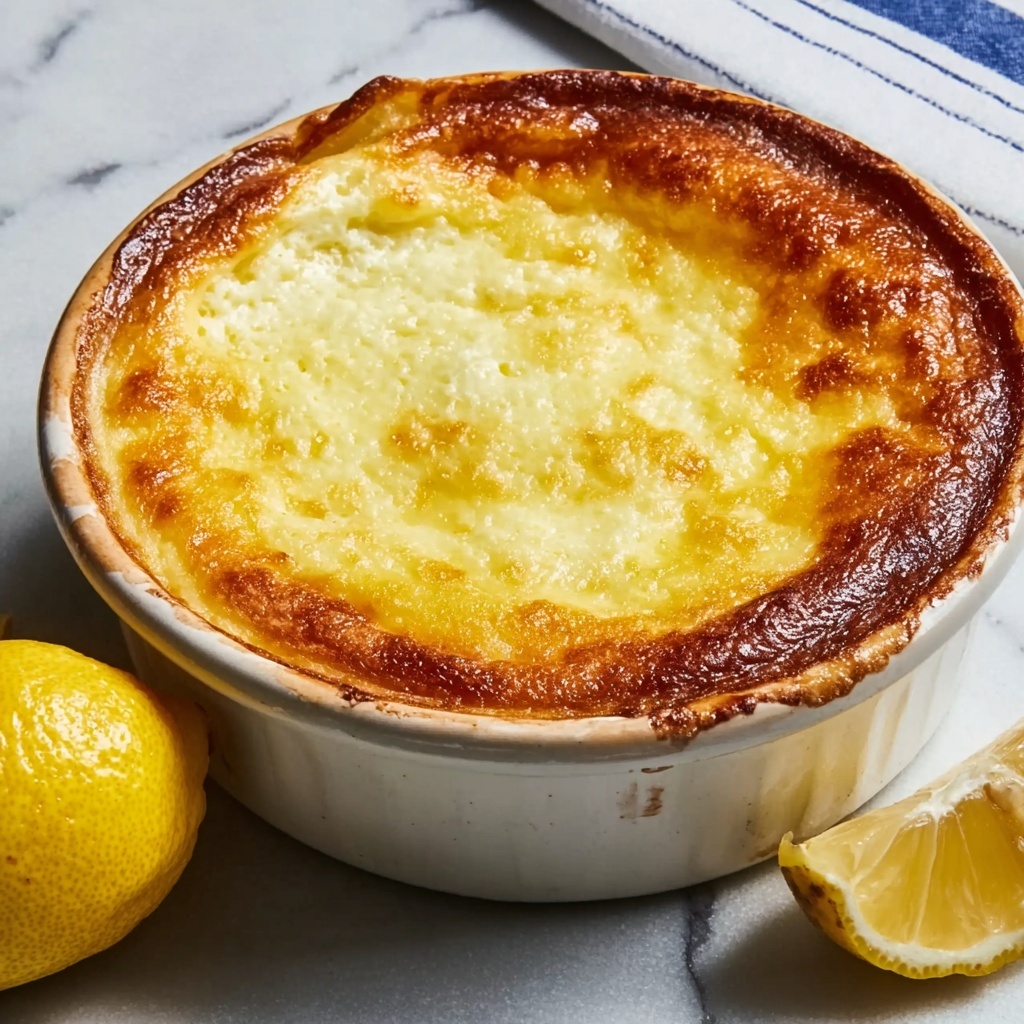
If you’re looking for a dessert that feels like a warm hug on a plate, this Baked Lemon Pudding Recipe is exactly what you need. It’s a light, airy treat that balances bright citrus flavor with a creamy, silky texture, making it perfect for any occasion. Whether you want to impress guests or treat yourself, this pudding’s delicate lemon zing paired with a golden baked top will have everyone asking for seconds. Plus, it’s surprisingly simple to make, which is always a win in my kitchen.

Ingredients You’ll Need
The beauty of this Baked Lemon Pudding Recipe is how just a handful of pantry staples come together to create such a luscious dessert. Each ingredient plays a vital role, whether it’s adding sweetness, structure, or that unmistakable zesty lemon kick.
- Sugar: Provides sweetness and helps create the delicate crust that forms on top when baked.
- All-purpose flour: Acts as a thickening agent to give the pudding its creamy body without heaviness.
- Salt: Balances the sweetness and enhances the depth of flavors.
- Whole milk: Adds richness and smooth texture essential for a comforting pudding.
- Egg yolks: Contribute to the custard base’s velvety richness and help it set properly.
- Fresh lemon juice: Delivers a bright, refreshing citrus flavor that defines this pudding.
- Lemon zest: Intensifies lemon aroma and adds a lovely texture to every bite.
- Vanilla extract: Provides a warm, sweet undertone that balances the tartness.
- Egg whites: Whipped to stiff peaks to lighten the batter, creating an airy finish.
- Powdered sugar (optional): For a delicate dusting that adds a touch of elegance before serving.
How to Make Baked Lemon Pudding Recipe
Step 1: Prepare Your Oven and Dish
Start by preheating your oven to 350°F (175°C). Grease a 1-quart baking dish or individual ramekins well so your pudding doesn’t stick. Setting this stage early ensures your dessert bakes evenly with a gorgeous golden crust.
Step 2: Create the Custard Base
In a medium saucepan, whisk together sugar, flour, and salt for an even blend of dry ingredients. Gradually add whole milk while stirring continuously. This prevents lumps and helps gently heat the mixture to a perfect creamy consistency.
Step 3: Thicken the Mixture
Place the saucepan over medium heat, stirring frequently to avoid scorching. You’ll notice the mixture thickening and starting to bubble slightly — this signals the right moment to remove it from heat, ensuring a smooth custard without curdling.
Step 4: Temper the Egg Yolks
In a separate bowl, lightly beat the egg yolks. Slowly add about 1/2 cup of the hot milk mixture into the yolks while whisking nonstop; this gentle introduction helps prevent the eggs from scrambling when combined. Then, stir the tempered yolks back into the saucepan for a luscious, thickened base.
Step 5: Add Lemon and Vanilla Flavors
Stir in fresh lemon juice, bright lemon zest, and a splash of vanilla extract until everything is fully incorporated. These elements are where the pudding truly comes alive with its signature refreshing, aromatic sparkle.
Step 6: Whip and Fold in Egg Whites
In a completely clean bowl, beat the egg whites until stiff peaks form—this creates the light, airy texture that makes this pudding so special. Gently fold the beaten whites into your lemony custard mixture, taking care to keep as much air in as possible for a fluffy finish.
Step 7: Prepare for Baking with a Water Bath
Pour the pudding batter into your buttered dish or ramekins. Set the dish inside a larger baking pan and carefully pour hot water until it comes halfway up the sides — this water bath ensures even, gentle cooking, preventing cracks and keeping the pudding moist.
Step 8: Bake Until Set
Bake for 35 to 40 minutes or until the pudding is set and the top turns a delicate golden brown. You’ll know it’s done when the edges look firm but the center still has a little wobble — that perfect balance of creamy and light texture.
Step 9: Cool and Finish
Remove the pudding from the oven and allow it to cool slightly for about 10 minutes. Dust the top with powdered sugar if you like, adding a classic, elegant touch that complements the dessert’s fresh tartness beautifully.
How to Serve Baked Lemon Pudding Recipe
Garnishes
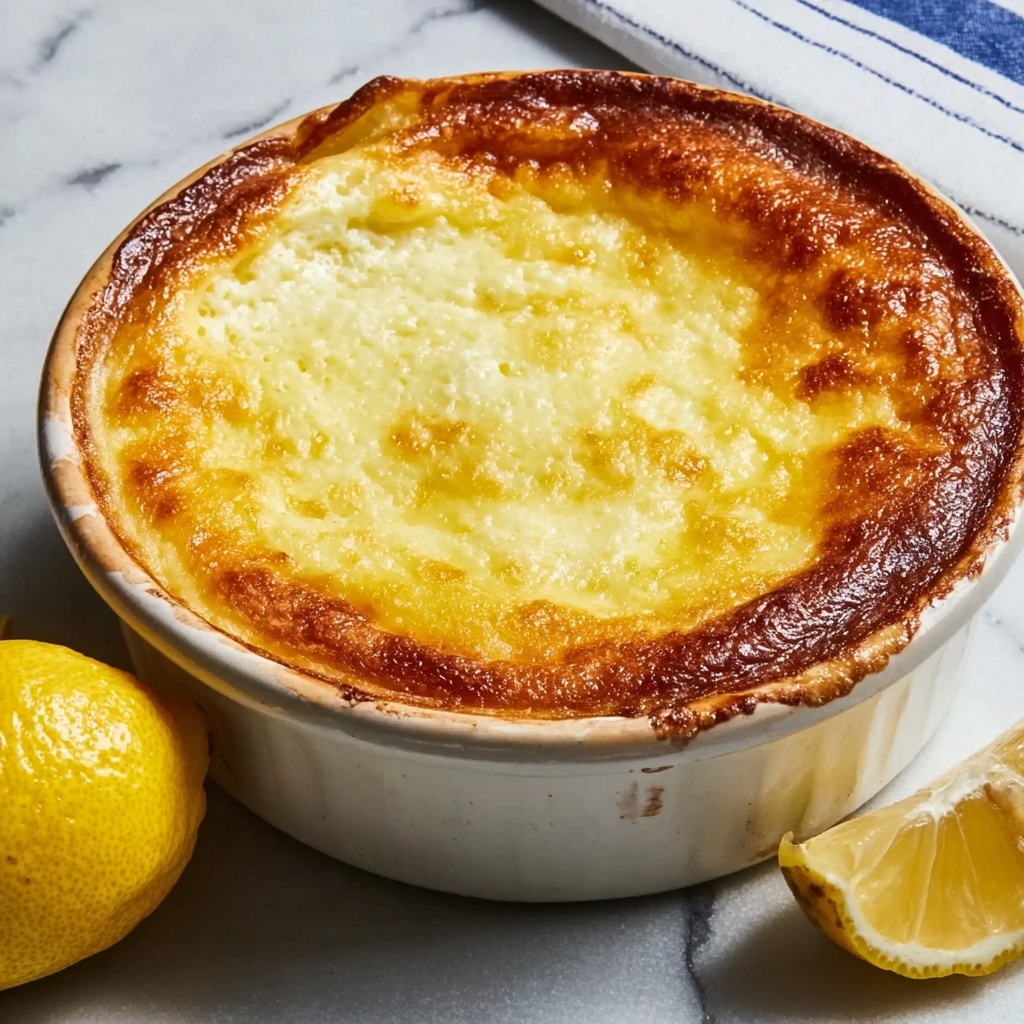
A simple dusting of powdered sugar is timeless, but for an extra pop, try fresh mint leaves or a few thin lemon slices. These add vibrant color and a hint of freshness that pairs wonderfully with the pudding’s citrusy zing.
Side Dishes
This pudding shines on its own but serves beautifully alongside a light, crisp fruit salad or a scoop of vanilla bean ice cream. The creaminess of the ice cream balances the tart lemon flavor for a marvelous contrast in each bite.
Creative Ways to Present
Serve the pudding in charming individual ramekins for an elegant touch, perfect for dinner parties. You can also layer it with fresh berries and whipped cream in pretty glass parfait cups for a stunning, layered dessert that impresses without extra effort.
Make Ahead and Storage
Storing Leftovers
If you have any leftovers (which might be rare!), cover the pudding with plastic wrap and keep it in the refrigerator for up to 3 days. This allows the flavors to meld even more while maintaining the creamy texture.
Freezing
While this pudding is best enjoyed fresh, you can freeze it if needed. Transfer portions to airtight containers and freeze for up to 1 month. Thaw overnight in the refrigerator before reheating to retain as much of its smooth texture as possible.
Reheating
Gently warm refrigerated pudding in a microwave for 20 to 30 seconds or in a low oven (around 300°F) covered with foil, just until warmed through. Avoid overheating to prevent curdling or drying out the delicate pudding.
FAQs
Can I use lemon extract instead of fresh lemon juice?
Fresh lemon juice offers the best natural tang and brightness that defines this pudding, but in a pinch, a small amount of lemon extract can work. Just be careful—extract is more concentrated, so start with less and adjust to taste.
What makes the pudding so light and fluffy?
It’s all about the egg whites whipped to stiff peaks and carefully folded into the base. This incorporation of air is what creates the delicate, airy texture that sets this lemon pudding apart from denser custards.
Can I make this recipe dairy-free?
You can substitute whole milk for a creamy non-dairy milk like coconut or almond milk, but the texture and flavor might be slightly different. For best results, choose a rich, full-fat alternative and keep an eye on the thickness as you cook.
Why do I bake the pudding in a water bath?
Baking in a water bath, or bain-marie, ensures gentle, even heat distribution around the pudding. This prevents cracking and helps the custard cook slowly for a smooth, tender finish without drying out.
How can I tell when the pudding is perfectly baked?
Look for the edges to be set and firm while the center still has a slight wobble when you gently shake the dish. The golden top and slight jiggle in the middle mean it’s perfectly creamy inside without being runny.
Final Thoughts
This Baked Lemon Pudding Recipe is such a delightful way to end any meal, offering a fresh citrus burst paired with an irresistibly creamy texture. It feels fancy but is so easy to master that you’ll want to make it again and again. Trust me, once you try this, it will become a new favorite to share with your loved ones.
Print
Baked Lemon Pudding Recipe
- Prep Time: 15 minutes
- Cook Time: 40 minutes
- Total Time: 55 minutes
- Yield: 4 servings
- Category: Dessert
- Method: Baking
- Cuisine: American
Description
This Baked Lemon Pudding is a light and tangy dessert featuring a creamy lemon custard base folded with airy egg whites for a delicate texture. It is gently baked in a water bath to ensure a smooth and tender pudding with a slightly golden top. Perfect for a refreshing treat that balances sweetness with citrus brightness.
Ingredients
Ingredients
- 1 cup granulated sugar
- 3 tablespoons all-purpose flour
- 1/4 teaspoon salt
- 1 1/2 cups whole milk
- 3 large eggs, separated
- 1/4 cup fresh lemon juice
- 1 tablespoon lemon zest
- 1 teaspoon vanilla extract
- Powdered sugar, for dusting (optional)
Instructions
- Preheat Oven: Preheat the oven to 350°F (175°C) and grease a 1-quart baking dish or individual ramekins to prepare for baking.
- Combine Dry Ingredients & Milk: In a medium saucepan, whisk together sugar, flour, and salt. Gradually add whole milk while stirring constantly to blend thoroughly without lumps.
- Cook Mixture: Place the saucepan over medium heat and stir frequently until the mixture thickens and just reaches a boil. Once thickened, remove from heat to stop cooking.
- Temper Egg Yolks: Lightly beat the egg yolks in a separate bowl. Slowly whisk about 1/2 cup of the hot milk mixture into the yolks to temper them, preventing curdling. Then return the tempered yolks back into the saucepan and stir well to combine.
- Add Lemon & Vanilla: Stir in fresh lemon juice, lemon zest, and vanilla extract until fully incorporated, infusing the custard base with citrus and flavor.
- Beat Egg Whites: In a clean bowl, beat the egg whites until stiff peaks form. This step is crucial for achieving the pudding’s airy texture.
- Fold Egg Whites: Gently fold the beaten egg whites into the lemon mixture until just combined, being careful not to deflate the mixture and preserve the light texture.
- Prepare Water Bath & Pour: Pour the combined mixture into the greased baking dish or ramekins. Place the dish inside a larger baking pan and pour hot water halfway up the sides to create a water bath, which ensures even, gentle baking.
- Bake: Bake in the preheated oven for 35-40 minutes, or until the pudding is set and the top is lightly golden, indicating it is fully cooked but still tender.
- Cool & Serve: Remove the pudding from the oven and let it cool slightly before serving. Optionally, dust with powdered sugar for an elegant finish.
Notes
- Ensure egg yolks are tempered properly to avoid scrambling when added to hot milk.
- Folding the egg whites gently is key to maintaining a light and fluffy pudding.
- The water bath prevents cracking and uneven cooking by adding moisture and gentle heat distribution.
- Use fresh lemon juice and zest for best flavor impact.
- Serve slightly warm or at room temperature for optimal texture.