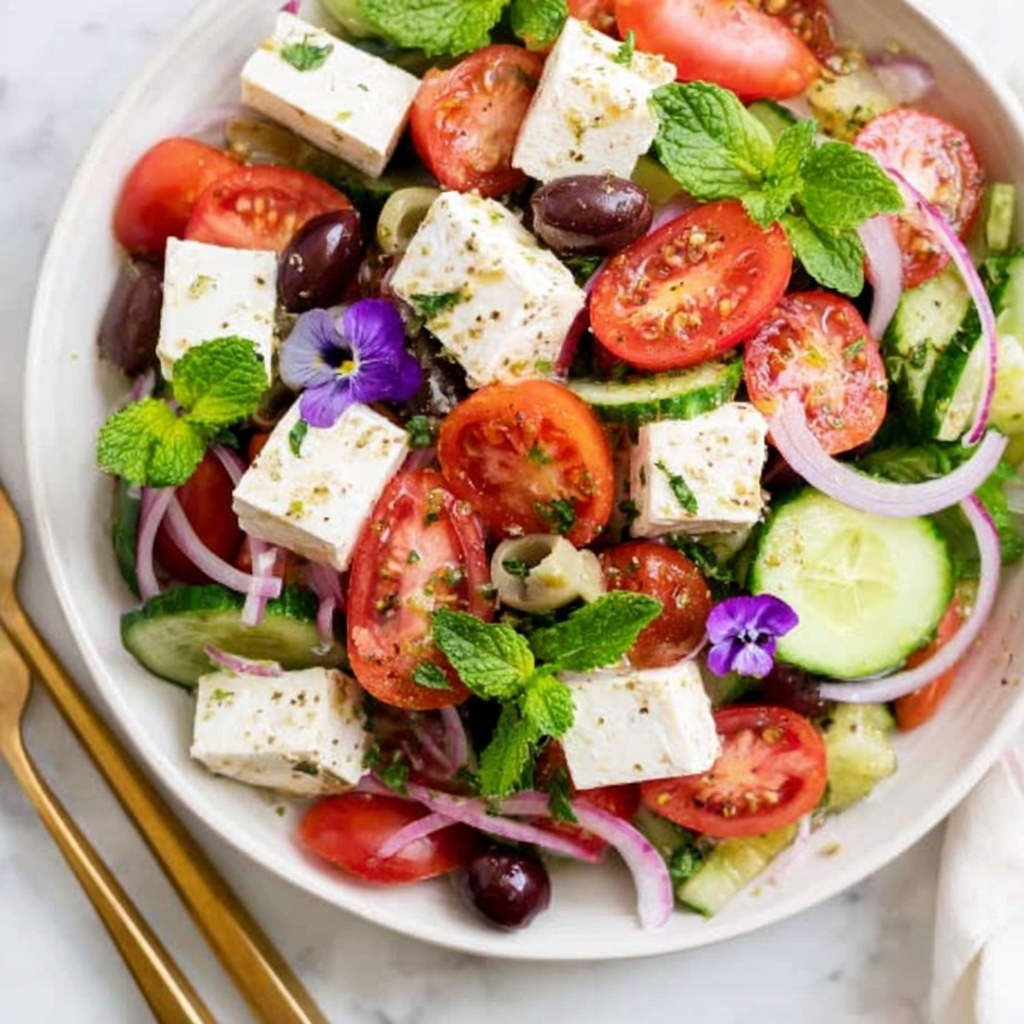
If you’re looking for a fresh, vibrant salad that bursts with Mediterranean flavors, this Classic Greek Salad Recipe is exactly what you need on your table. Combining crisp cucumbers, sweet cherry tomatoes, tangy feta cheese, and briny Kalamata olives all tossed in a zesty homemade dressing, this salad is a celebration of simple, wholesome ingredients. It’s not just a salad; it’s a taste of Greece that’s quick to make and perfect for any occasion.
Ingredients You’ll Need
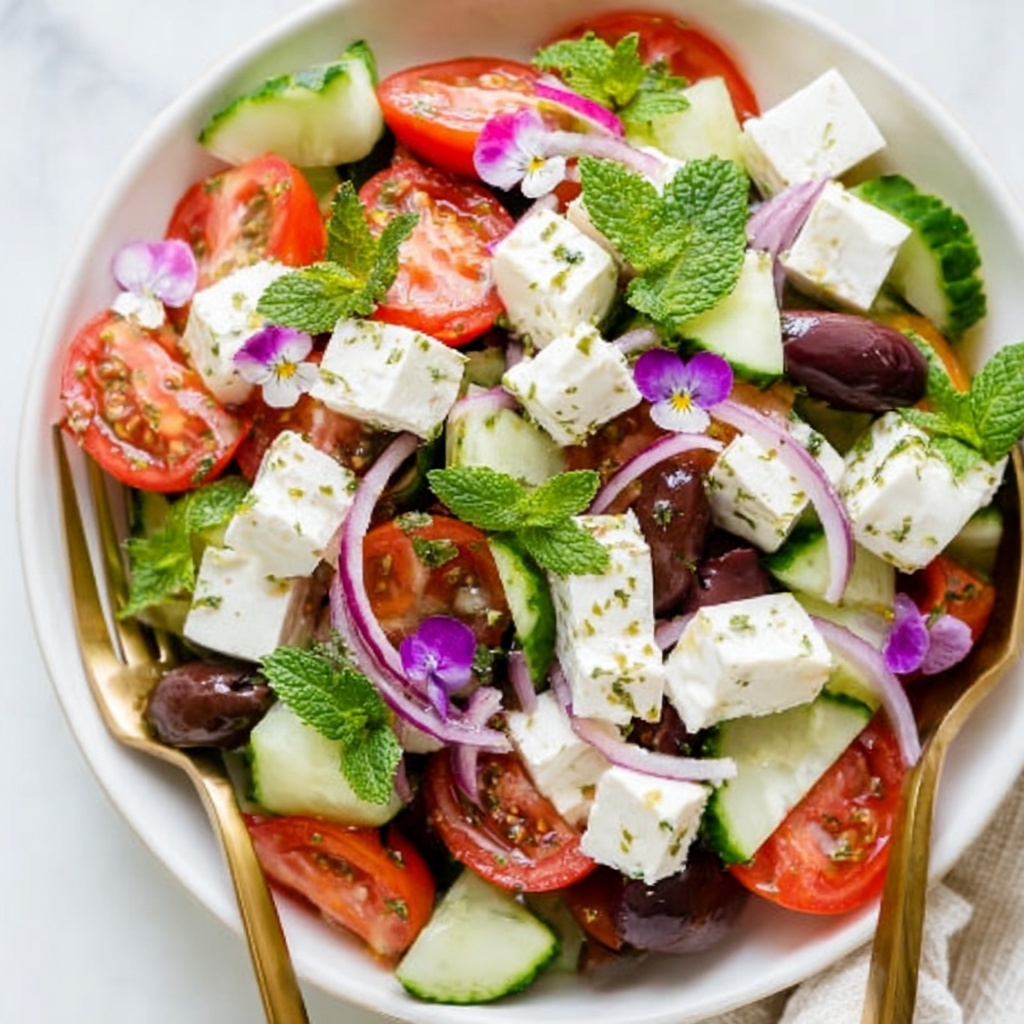
Each ingredient in this Classic Greek Salad Recipe plays an essential role in delivering the iconic balance of freshness, creaminess, and tang. These everyday items come together to create a dish that’s colorful, flavorful, and delightfully textural.
- Extra-virgin olive oil: The rich, fruity base for the dressing that brings everything together.
- Red wine vinegar: Adds the perfect tangy punch to brighten the salad.
- Garlic clove, minced: Introduces a subtle warmth and depth of flavor.
- Dried oregano: Essential herbaceous note that defines the salad’s Greek character.
- Dijon mustard: Helps emulsify the dressing with a mild kick.
- Sea salt: Enhances and balances all the flavors naturally.
- Freshly ground black pepper: Adds a gentle heat to the dressing.
- English cucumber: Provides a crisp, refreshing bite without overpowering moisture.
- Green bell pepper: Adds sweet crunch and vibrant color.
- Cherry tomatoes: Juicy bursts of sweetness and acidity.
- Feta cheese: The creamy, salty star component—using feta in brine ensures optimal flavor and texture.
- Red onion: Thinly sliced for a mild sharpness that balances richness.
- Kalamata olives: Briny depth that’s characteristic of any authentic Greek salad.
- Fresh mint leaves: Bright herbal finish that elevates the overall freshness.
How to Make Classic Greek Salad Recipe
Step 1: Prepare the Dressing
Start by whisking together the extra-virgin olive oil, red wine vinegar, minced garlic, dried oregano, Dijon mustard, sea salt, and freshly ground black pepper in a small bowl. Whisk until the dressing is fully emulsified and well combined. This blend of flavors lays the foundation for our Classic Greek Salad Recipe, lending brightness and a touch of herbiness.
Step 2: Assemble the Salad
Next, arrange the sliced English cucumber, chopped green bell pepper, halved cherry tomatoes, cubed feta cheese, thinly sliced red onions, and pitted Kalamata olives on a large serving platter. Layering these ingredients thoughtfully creates a stunning visual contrast and ensures every bite is a perfect balance of textures and flavors.
Step 3: Dress and Finish
Drizzle the prepared dressing evenly over the arranged vegetables and feta. Using a gentle hand, toss the salad just enough to combine, being careful not to break up the cheese cubes. Finish with a sprinkle of extra dried oregano and a handful of fresh mint leaves on top for brightness and aroma. Taste to check seasoning and adjust if necessary, then serve immediately to enjoy the lively textures at their best.
How to Serve Classic Greek Salad Recipe
Garnishes
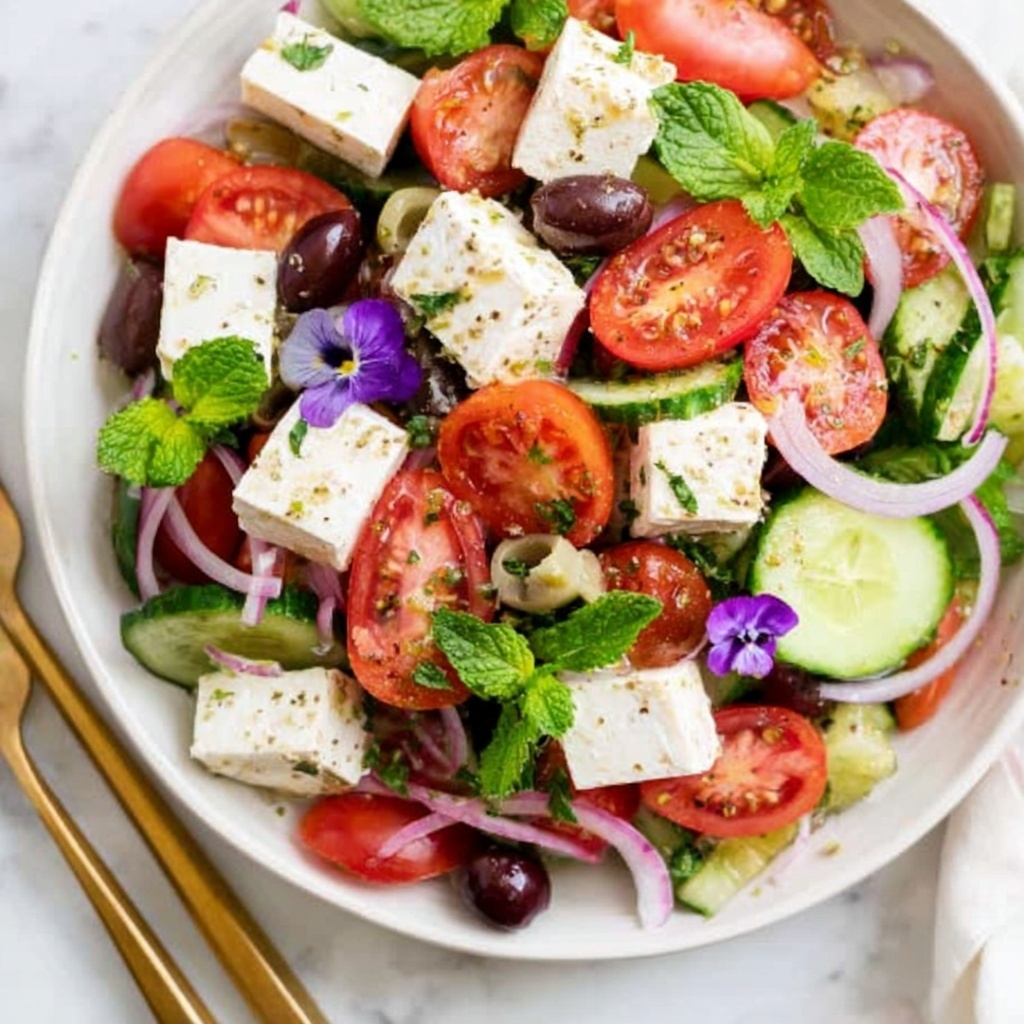
Adding fresh herbs like extra mint leaves or even some fresh oregano sprigs can enhance the salad’s visual appeal and flavor complexity. A drizzle of high-quality olive oil just before serving can also boost richness. For a touch of indulgence, sprinkle toasted pine nuts on top to add an unexpected crunchy element.
Side Dishes
This Classic Greek Salad Recipe pairs beautifully with grilled meats like lemon herb chicken, lamb skewers, or simply alongside crusty bread and hummus for a light, satisfying meal. It’s also a fantastic side for seafood dishes or Mediterranean-inspired spreads, adding brightness and balance to heartier flavors.
Creative Ways to Present
For a fun twist, try serving this salad in individual small bowls or cups during a party, making it easy for guests to enjoy without fuss. You can also turn it into a layered salad in a mason jar for on-the-go lunches or serve it atop a bed of fresh greens like arugula to create a more substantial salad offering.
Make Ahead and Storage
Storing Leftovers
Store any leftover salad in an airtight container in the fridge for up to two days. To keep the textures crisp, it’s best to keep the dressing separate and toss the salad right before serving again. The freshness of vegetables will hold up well, though the salad tastes best when freshly made.
Freezing
Freezing is not recommended for this Classic Greek Salad Recipe since the fresh vegetables and feta cheese can lose their texture and become watery once thawed. It’s best enjoyed fresh for optimal taste and texture.
Reheating
This salad is designed to be served cold and fresh, so reheating is not advisable. If you want a warm twist on the ingredients, consider warming a grilled protein or side dish to accompany the chilled salad rather than heating the salad itself.
FAQs
Can I use regular vinegar instead of red wine vinegar?
While you can substitute with other kinds of vinegar, red wine vinegar offers a distinct fruity and tangy flavor that complements the salad perfectly. Using it helps to keep the authentic taste of the Classic Greek Salad Recipe.
Is there a vegan version of this salad?
Absolutely! Simply omit the feta cheese or replace it with a vegan cheese alternative or marinated tofu cubes for that creamy element without dairy.
Can I prepare this salad ahead of time?
You can prep the vegetables in advance, but it’s best to keep the dressing separate until serving to maintain crispness and freshness in the salad.
What type of olives should I use?
Kalamata olives are traditional for this salad because of their rich, tangy flavor and tender texture, but you can experiment with other brined olives if you prefer a milder taste.
How long does the salad last in the fridge?
It stays fresh for about 24 to 48 hours when stored properly in an airtight container. After that, the ingredients may start to release water, softening the salad’s crisp textures.
Final Thoughts
This Classic Greek Salad Recipe is a timeless favorite for a good reason. It captures the essence of Greek cuisine with its fresh, simple ingredients and vibrant flavors. Whether you’re serving it as a quick lunch, a side dish at dinner, or as part of a festive spread, it’s sure to brighten up your meal and bring a little Mediterranean sunshine to your plate. Give it a try, and you’ll see why it’s such a beloved dish around the world.
Print
Classic Greek Salad Recipe
- Prep Time: 10 minutes
- Cook Time: 0 minutes
- Total Time: 15 minutes
- Yield: 4 servings
- Category: Salad
- Method: No-Cook
- Cuisine: Greek
- Diet: Vegetarian
Description
A refreshing and vibrant Classic Greek Salad featuring crisp cucumbers, sweet cherry tomatoes, tangy feta cheese, and Kalamata olives, all tossed in a zesty oregano and garlic dressing. Perfect as a light lunch or a colorful side dish.
Ingredients
Dressing
- ¼ cup extra-virgin olive oil
- 3 tablespoons red wine vinegar
- 1 garlic clove, minced
- ½ teaspoon dried oregano, plus more for sprinkling
- ¼ teaspoon Dijon mustard
- ¼ teaspoon sea salt
- Freshly ground black pepper, to taste
Salad
- 1 English cucumber, cut lengthwise, seeded, and sliced ¼-inch thick
- 1 green bell pepper, chopped into 1-inch pieces
- 2 cups halved cherry tomatoes
- 5 ounces feta cheese, cut into ½-inch cubes (feta in brine recommended)
- ⅓ cup thinly sliced red onion
- ⅓ cup pitted Kalamata olives
- ⅓ cup fresh mint leaves
Instructions
- Prepare the Dressing: In a small bowl, whisk together the extra-virgin olive oil, red wine vinegar, minced garlic, dried oregano, Dijon mustard, sea salt, and freshly ground black pepper until fully combined and emulsified.
- Assemble the Salad: Arrange the cucumber slices, green bell pepper pieces, halved cherry tomatoes, feta cheese cubes, thinly sliced red onions, and pitted Kalamata olives on a large platter in an even layer.
- Dress and Finish: Drizzle the dressing evenly over the arranged vegetables and feta. Very gently toss the ingredients to combine without breaking up the cheese. Sprinkle with extra oregano and top with fresh mint leaves. Taste and adjust seasoning if necessary, then serve immediately.
Notes
- Use feta cheese in brine for best flavor and texture.
- To avoid soggy salad, add dressing just before serving.
- For extra freshness, chill the salad ingredients beforehand.
- Can be served as a side dish or a light meal on its own.
- Omit Dijon mustard for a more traditional dressing if desired.